
Here is a before photo of a homeowner’s attic that was poorly insulated with visible gaps, cracks, and insufficient layers of insulation material. This image conveys a lack of comfort, warmth, and energy efficiency, with the need to improve the home’s overall insulation to reduce heating or cooling costs. Rodents can thrive off of these poorly insulated attics getting them to move in and build nests, often using the insulation material as bedding. Without sufficient insulation, attics can also have moisture problems, creating an environment where rodents can find water or food sources. Properly insulating and sealing an attic helps prevents rodents from gaining access and makes it harder for them to survive there.
Here is a photo of an attic properly insulated. This lowers your energy bills because your HVAC system doesn’t have to work as hard. Insulation also acts as a barrier against outdoor elements, preventing heat loss and gain. Additionally, it helps keep moisture out by reducing condensation, which can lead to mold or rot. A well-insulated home can also deter rodents, as the insulation helps seal gaps and cracks that would otherwise allow easy access for pests. This combination of energy savings, moisture control, and pest prevention creates a more comfortable and cost-effective living environment.
We use heat guns when laying insulation this can be used to detect areas with insufficient insulation by pointing it at different parts of the attic or walls. We use a thermal camera attachment, it can reveal temperature differences on the surface. Areas where heat is escaping due to gaps or improper insulation will show up as warmer spots compared to well-insulated sections.This video shows an attic after we installed blown-in cellulose insulation, creating a thicker, more consistent thermal barrier to help improve comfort and energy efficiency throughout the home.Air Sealing
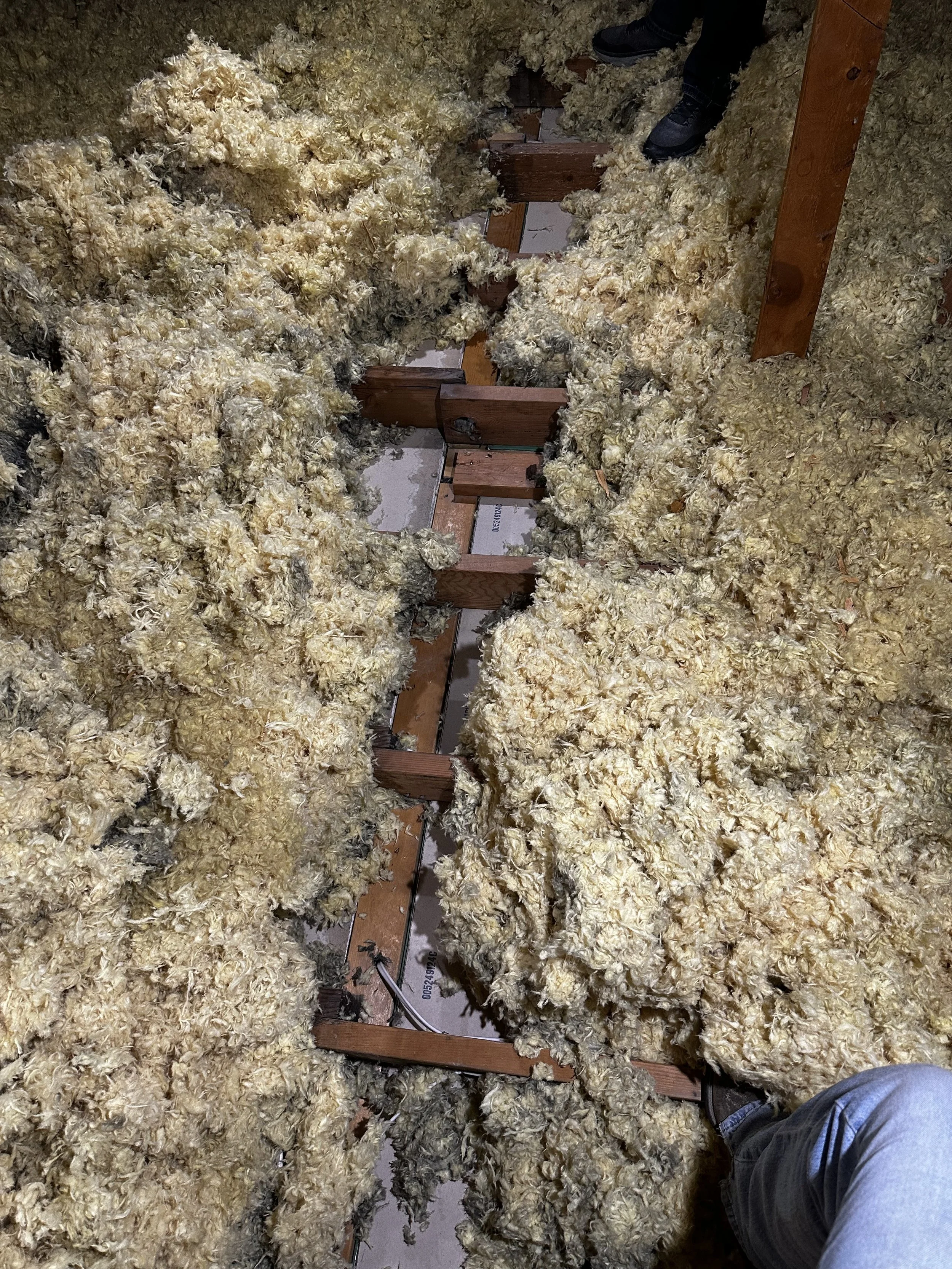
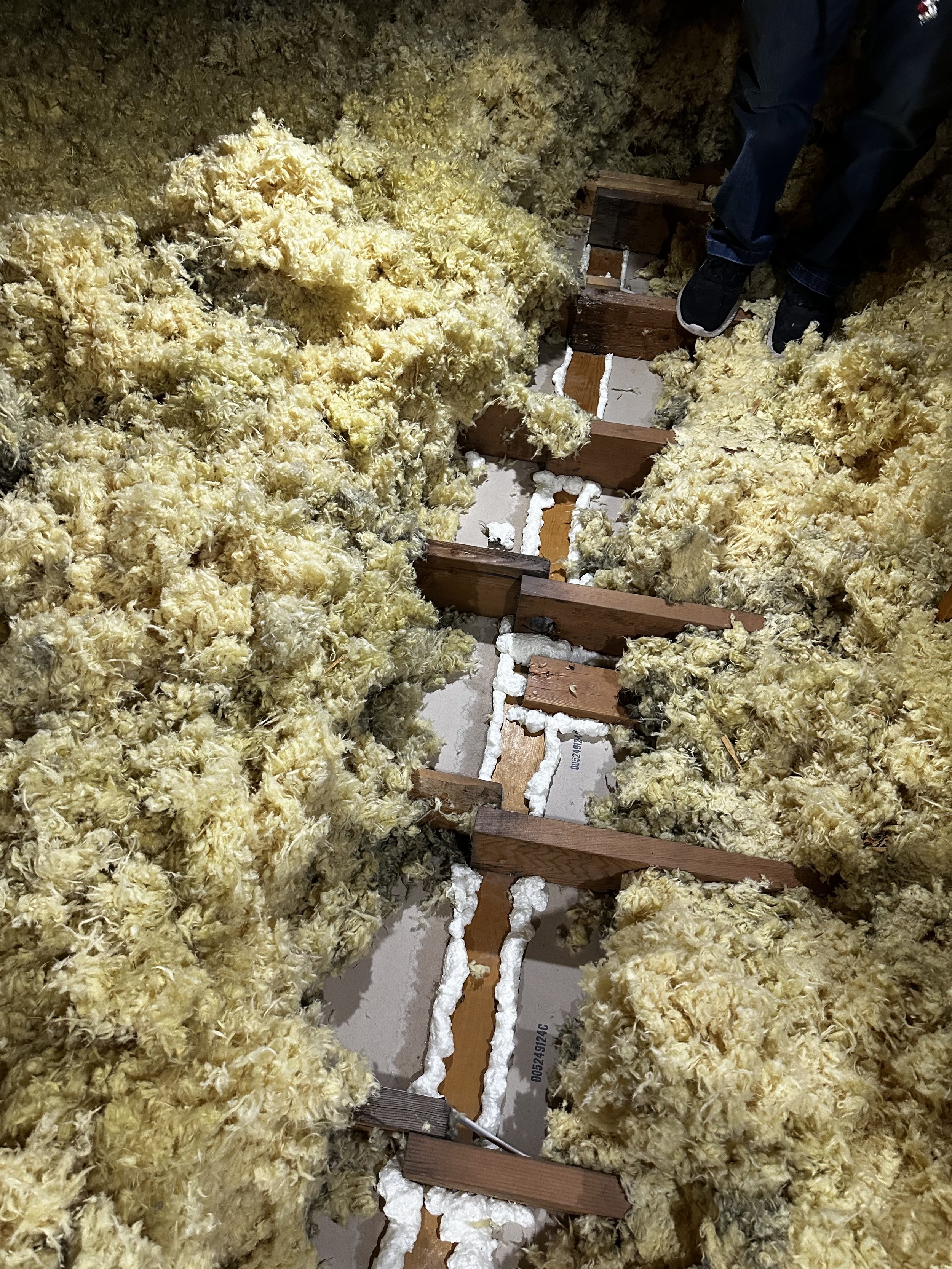
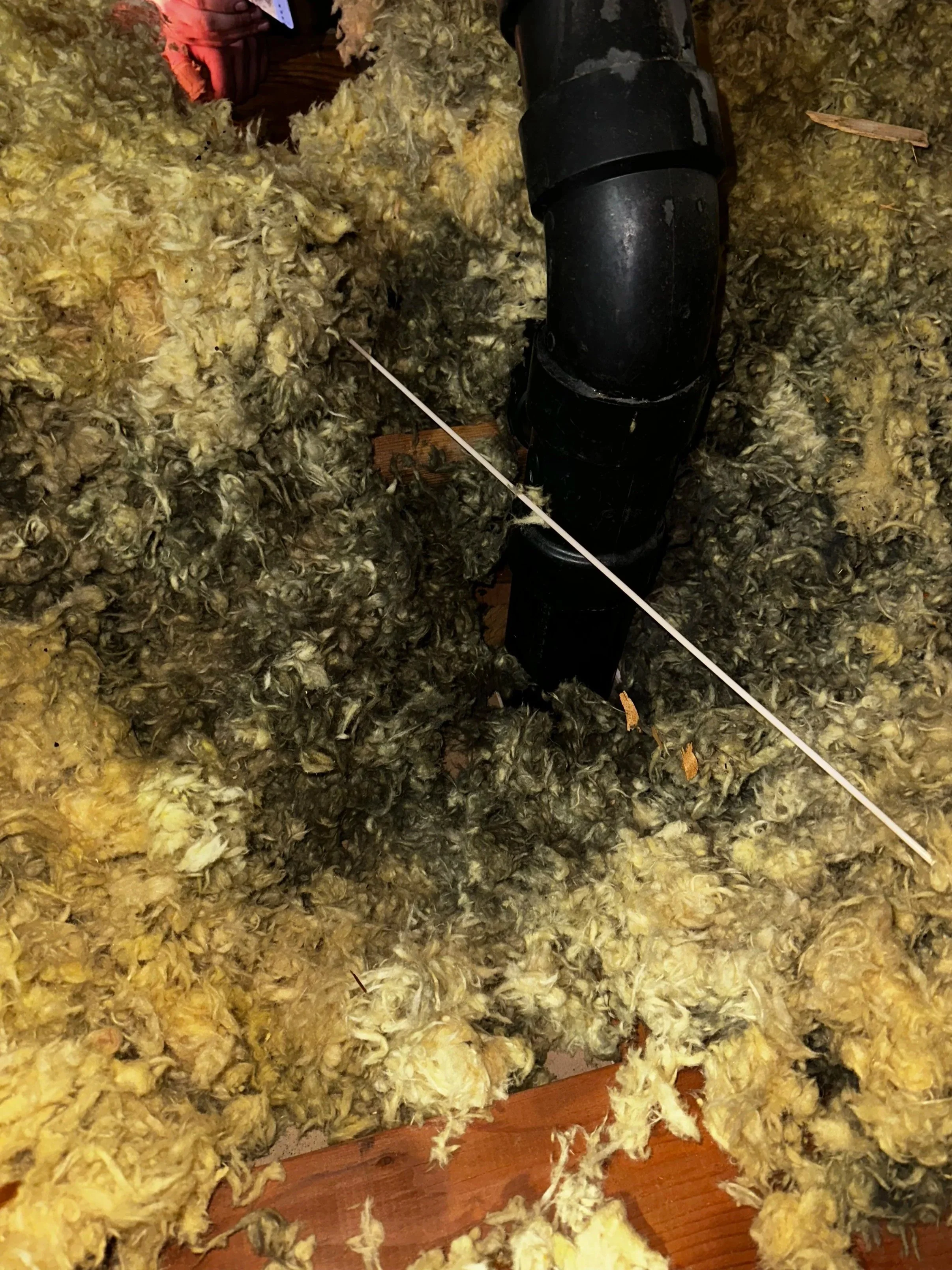
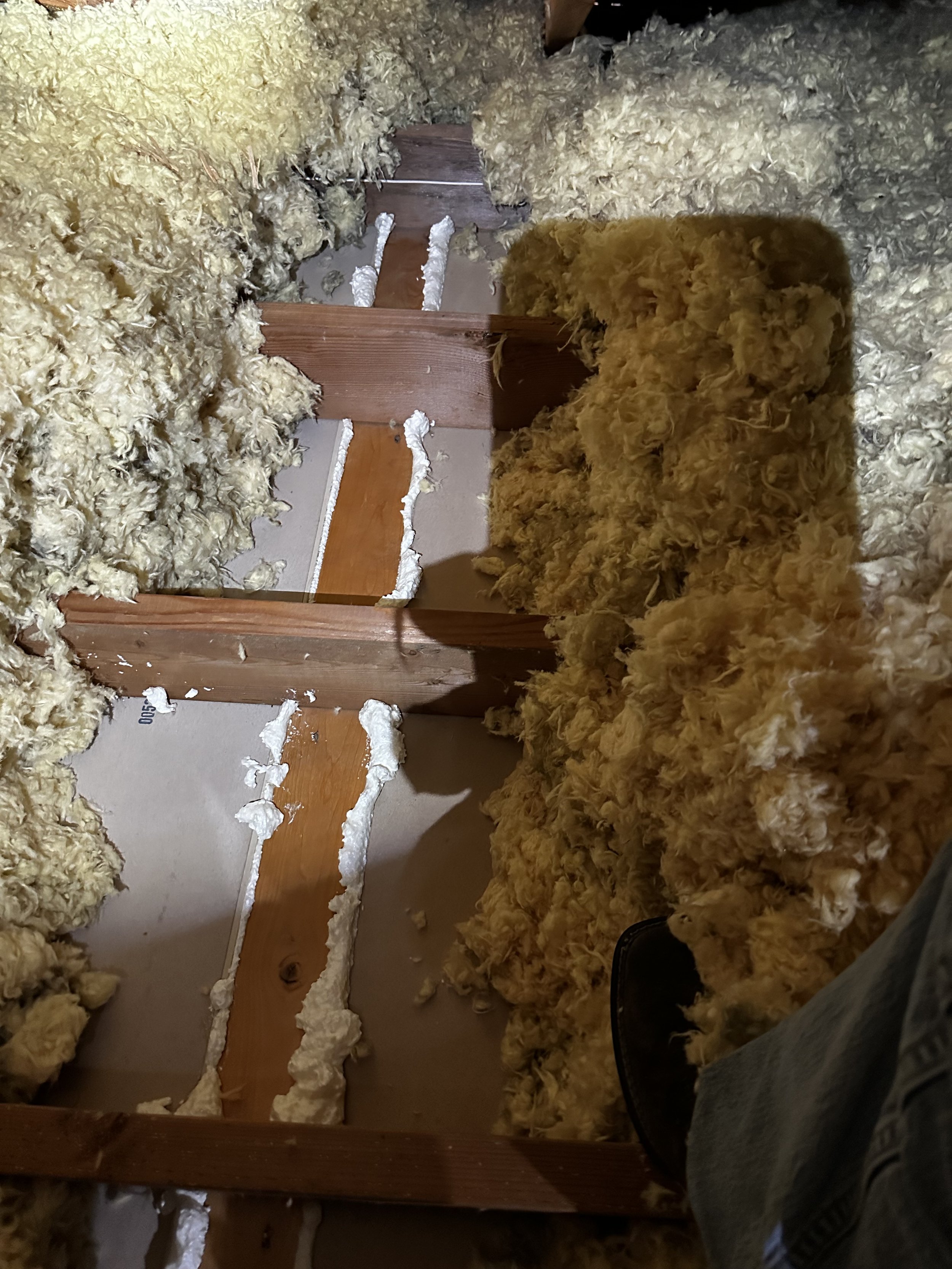
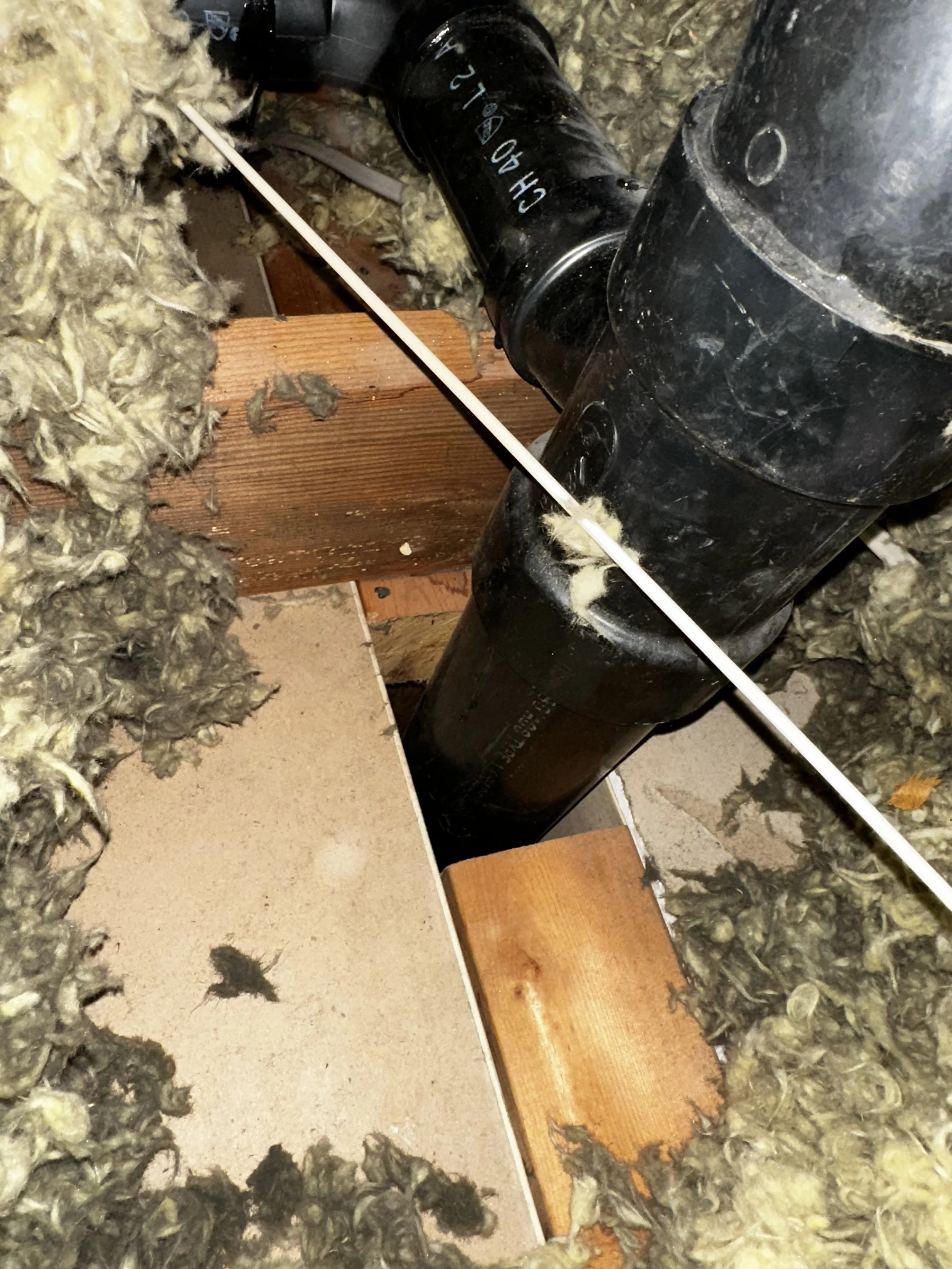
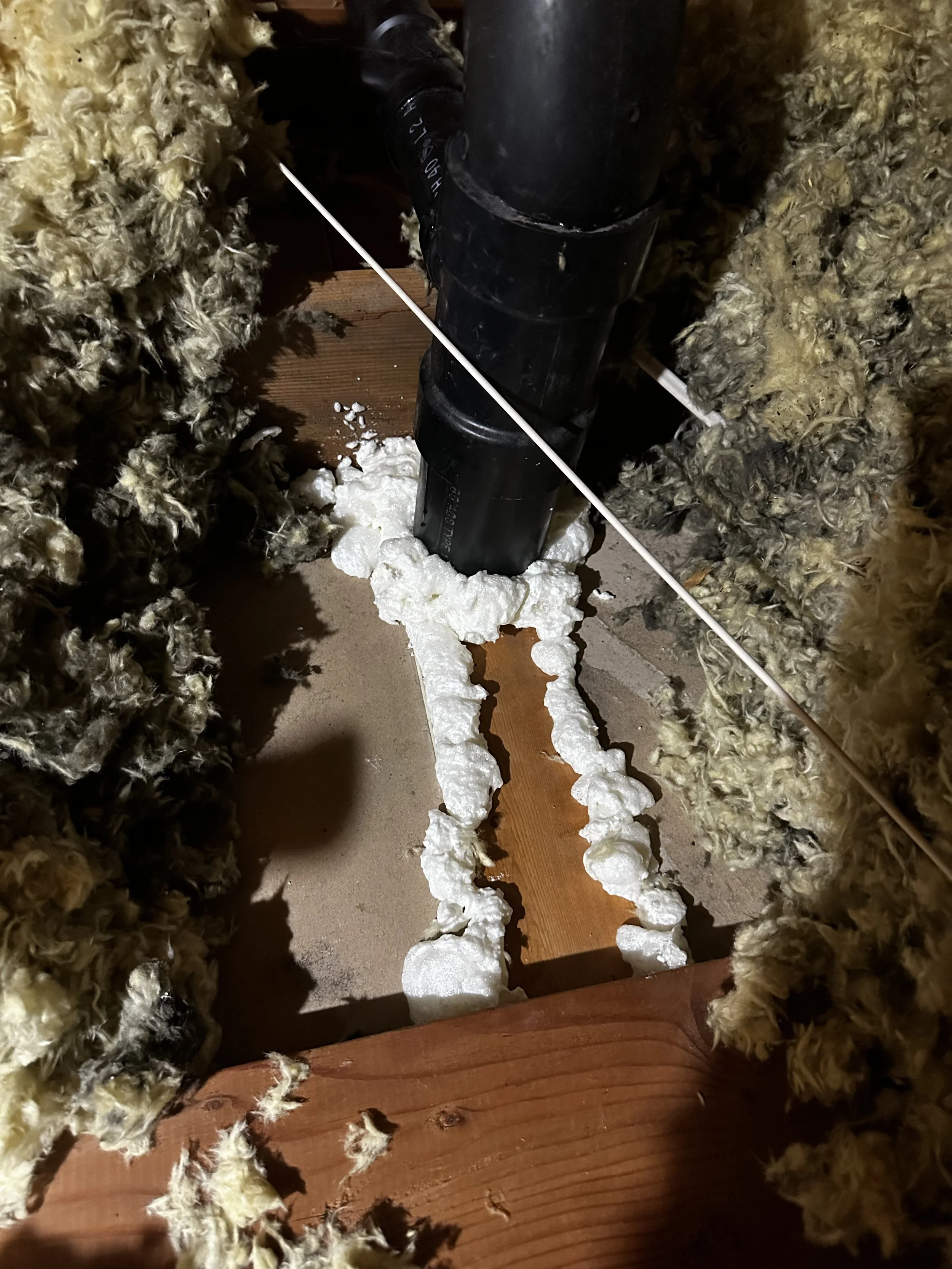
Those gray streaks in the insulation aren’t dirt—they’re proof of air leakage. Over time, air escaping through unsealed top plates pulls dust into the insulation, reducing its effectiveness and driving up energy costs. Here, we’re sealing those gaps with spray foam to lock in comfort and improve efficiency.